Issue 24
Thailand got its experiment back, and the whole supply chain showed up to watch
Four days at Thailand Space Expo. A university payload home from the ISS, a hall full of people who build satellites, and the region’s first space fund out raising money.
TL;DR
- A Kasetsart lab flew liquid crystals to orbit, and back.
- The exhibition floor was Chinese, Japanese and Finnish satellite builders.
- Southeast Asia’s first space-only VC fund is raising US$50 million.
The experiment came home
The screen you are reading this on is flat because of liquid crystals. Before them a television was a box two people had to lift, because the electron beam inside needed depth to travel.
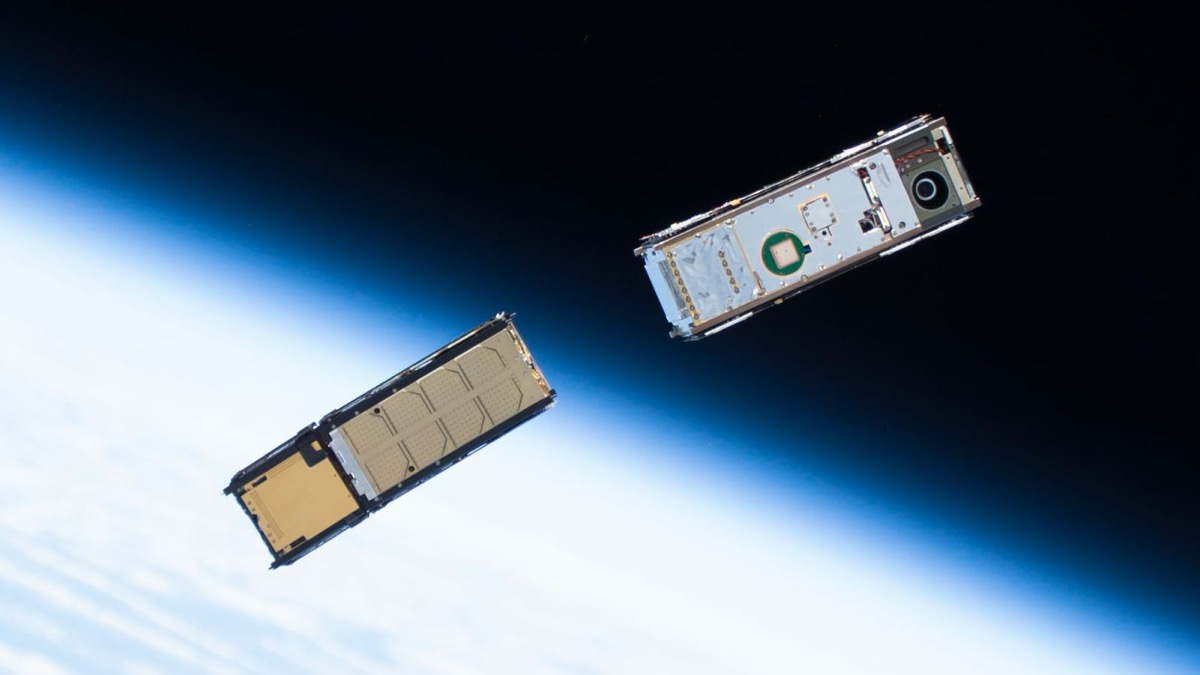
Thailand sent some of those crystals to the International Space Station, and got them back.
Assoc. Prof. Nattaporn Chattham of Kasetsart University leads the work, and I sat with her after the session.
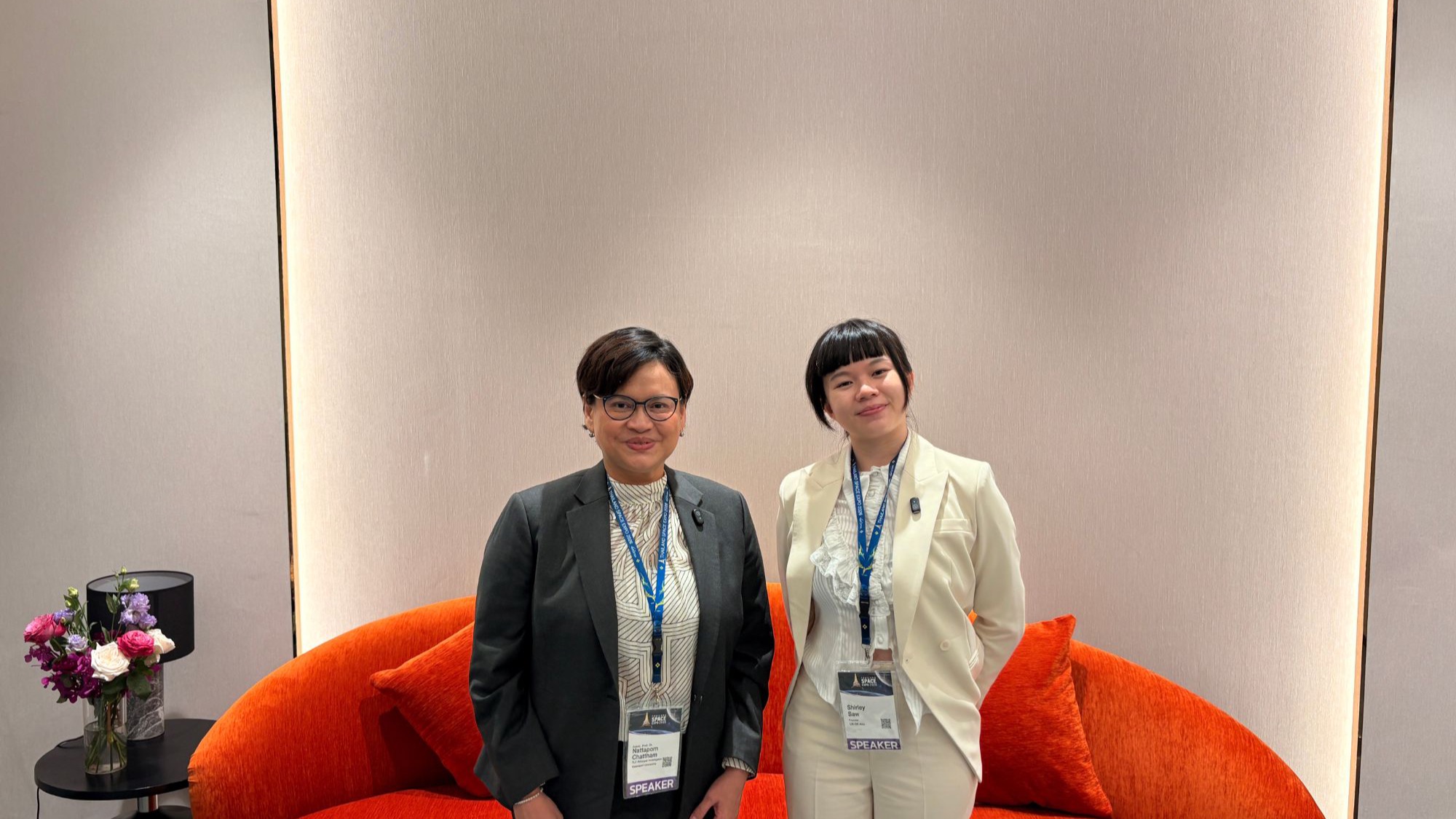
What stayed with me was not the physics. It was how far ahead she thinks. The students who use this result are not the ones who flew it. They are the ones who turn up in a few years, to a university that already has a payload which went to orbit and came home.
A longer conversation with her is coming about the future of Thailand space ecosystem!
Who was present?
Four launch companies on one panel: Rocket Lab, LandSpace, MaiaSpace, Innovative Space Carrier. Nineteen European companies pitching across three sessions. Heads of agency from Australia, Poland, the Philippines and Vietnam. Japan took two showcase slots to itself. Satellite builders from China, Korea, Finland and the UK, and Synspective from Tokyo, thirteen radar satellites up. The full programme runs to four days.
Co-located with all of it: APRSAF-32 and the tenth Moon Village workshop. A lot of supply in one hall, which usually means somebody is expected to buy.
I put the people I met into a carousel on LinkedIn. Six countries, and not one of them is building the same thing.
The question every ask in this AI age
I moderated the GISTDA panel on scaling AI across the space economy. Vincent Chai of CADFEM, Brian Zhou of Space Zenith, Shahrul Nizam Rahim of Viucom.
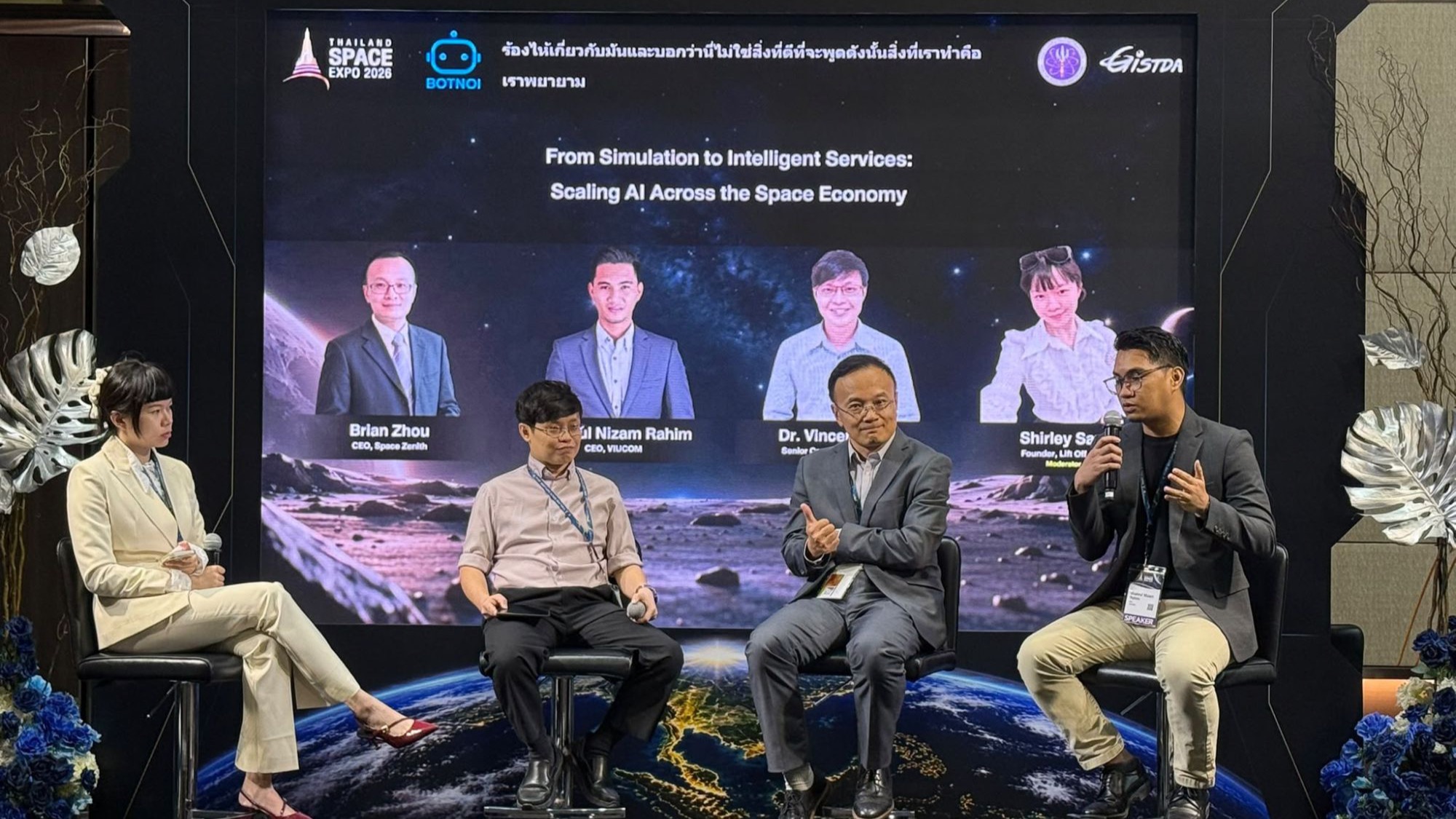
I asked all three the same thing, it was a 45 minutes session but I would point out the one I prefer and you as the audience would find the most benefit in. How does AI apply to the space economy especially in Thailand or SEA?
They sit at three different points of the same chain.
Vincent comes before the satellite exists. CADFEM sells simulation — build the spacecraft in software and break it there, so the expensive mistakes happen before anyone cuts metal. They have offices across ASEAN including Thailand, already working with universities here.
Brian comes after it sends something back. Space Zenith is the intelligence layer, the AI that turns a picture into an answer. “Anyone can buy a GPU and pick an open model. What is hard to buy is the loop around it.” , quoted by him.
His offer to the region is joint labs with local universities and satellite firms, building a Thai AI module together. He says training and in-space testing come with it.
Shahrul is at the other end, where there is no signal at all. Viucom started because his engineers needed data out of deep rainforest and ran out of ways to get it on the ground. The hardware is in the field now, in agriculture. He has written about monkeys pulling the antennas off to use as toothbrushes.
His answer to the control question is in the product. The devices take swappable satellite modules, so a customer picks whichever network suits their coverage, cost and rules.
Which happens to be the part Thailand is buying.
THEOS-3, the country’s fourth high-resolution Earth observation satellite, is being built at home. Thai firms make parts under transferred space-grade standards, and it is assembled and tested at the national centre at Space Krenovation Park in Chonburi. Before designing its sensors, GISTDA asked more than thirty Thai agencies what data they needed. Back came pollution, agriculture, forest fires and natural resources. Which is more or less a description of what the three men on my panel sell.
And the money is starting to organise
The gap underneath all of it is money, and someone is trying to close it.
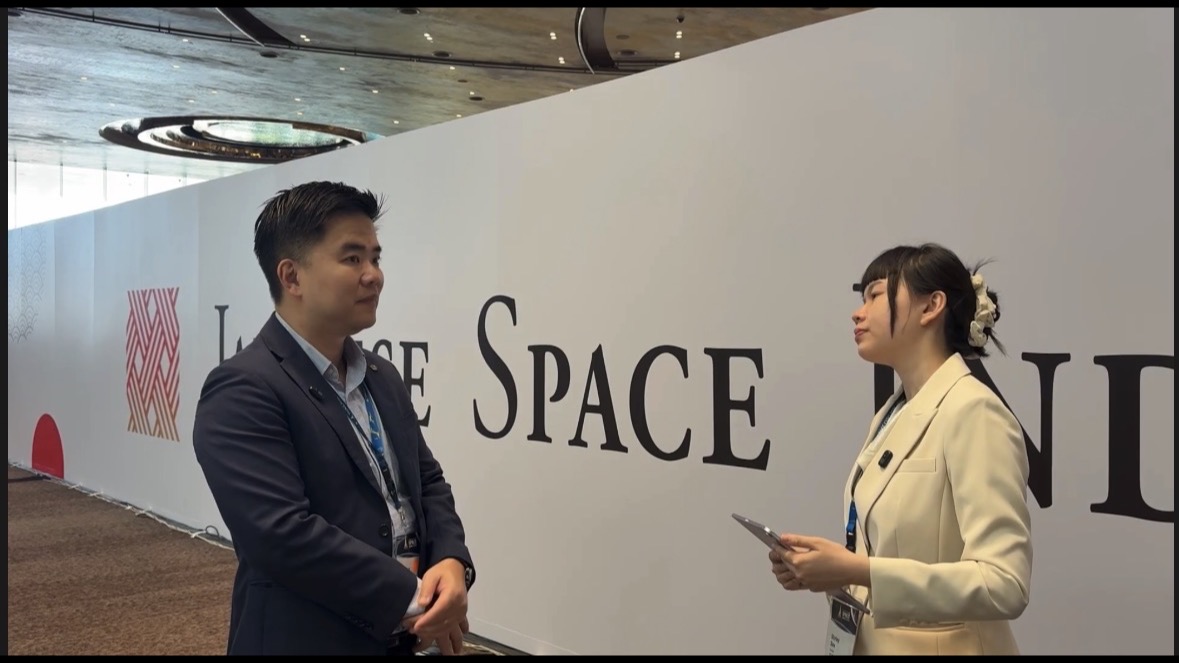
Ron Chiong was at the expo, and his firm helped put on four of its sessions. Amazing that I got to meet him months back when I was in Hong Kong.
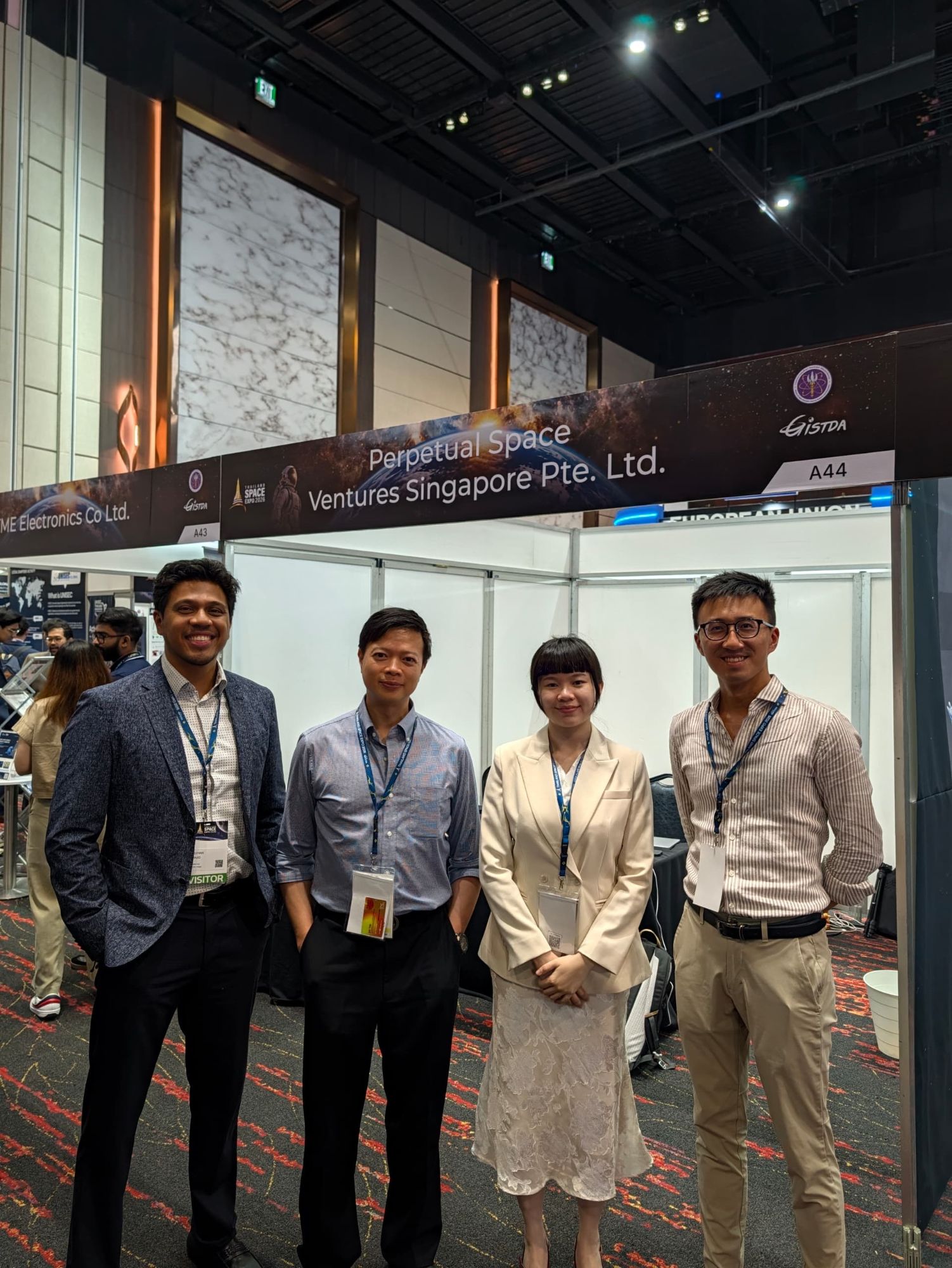
He did graduate training in space systems engineering and space operations, then twenty-five years in financial services. Most people in this business have one half of that. He describes himself as a pragmatic space investor: revenue before moonshots.
He also writes the part most fund managers leave out. Over the past thirty years, he says, the median space venture has returned less than its cost of capital.
His Singapore firm, Perpetual Space Ventures, is raising up to US$50 million for PSV ASEAN Space Fund I.
The terms are published. Six to eight main investments. Most of the money goes to Series A to C companies whose technology is already proven outside the lab. A smaller slice goes to early bets. Six years to return three times what went in.
Note what they screen for. Something that already sells, and a government on the customer list.
Chiong’s line: “every company of the future will be a space company, and ASEAN is ready to claim its place in that future.”
He is also already acting on it. Months before Bangkok, PSV signed an MOU to lead Viucom’s seed round, targeting US$5 million, after talks across Malaysia, Singapore and Thailand.
So the man I had on the panel talking about rainforests was already the fund’s deal. At the expo Shahrul thanked PSV for making the opportunities possible, which is what a lead investor is for.
What I took home
I also sat down with Dr Natthawat Hongkarnjanakul, who runs GISTDA’s Space Economy Promotion Office. We spent most of it on where Thailand’s space industry goes next. That one is its own piece.
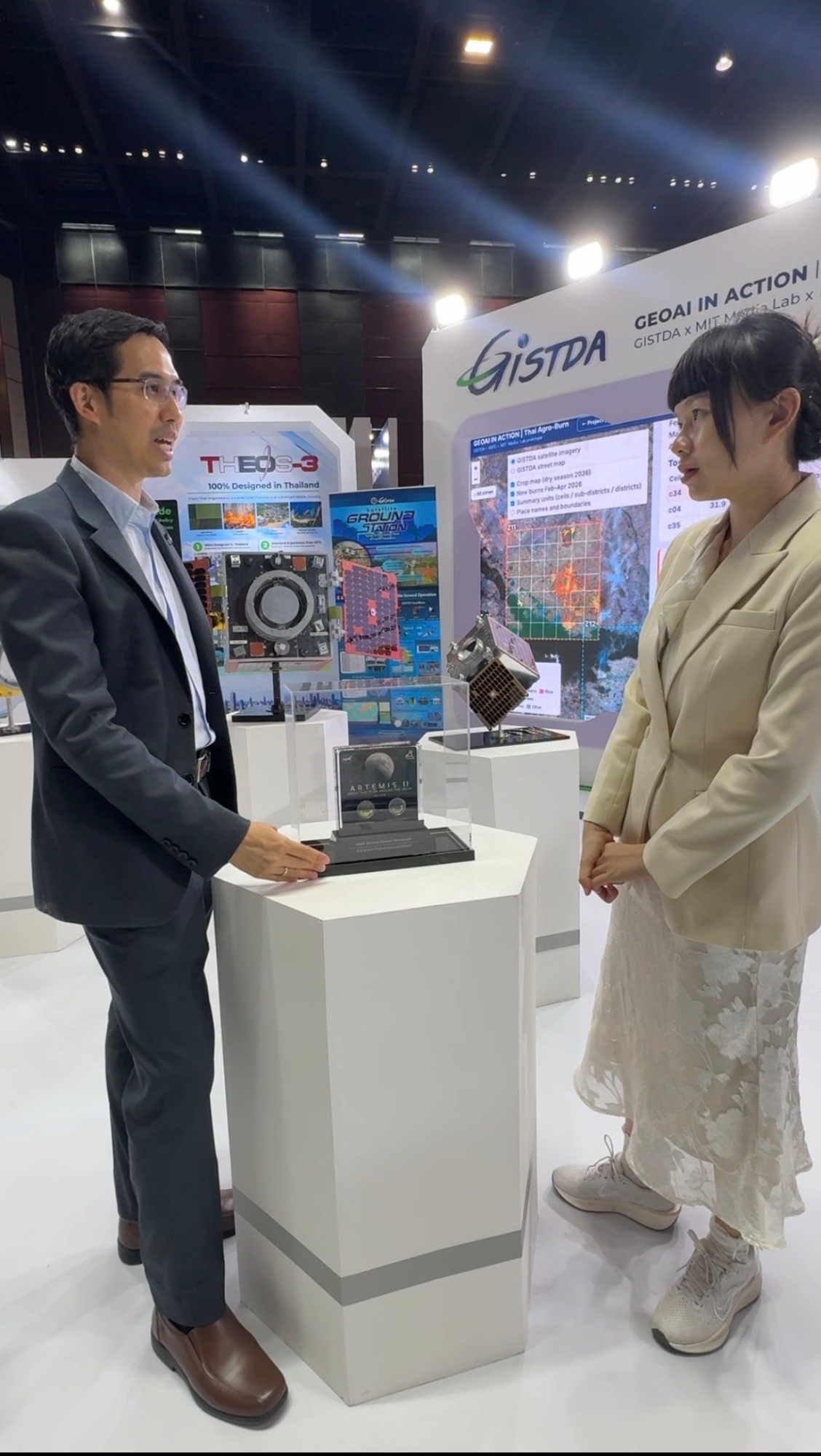
I’ve gotten a few interviews down with the Voyager Technologies team, CEO of Synspective SG and GM of Galaxy Space. You can look forward to them!
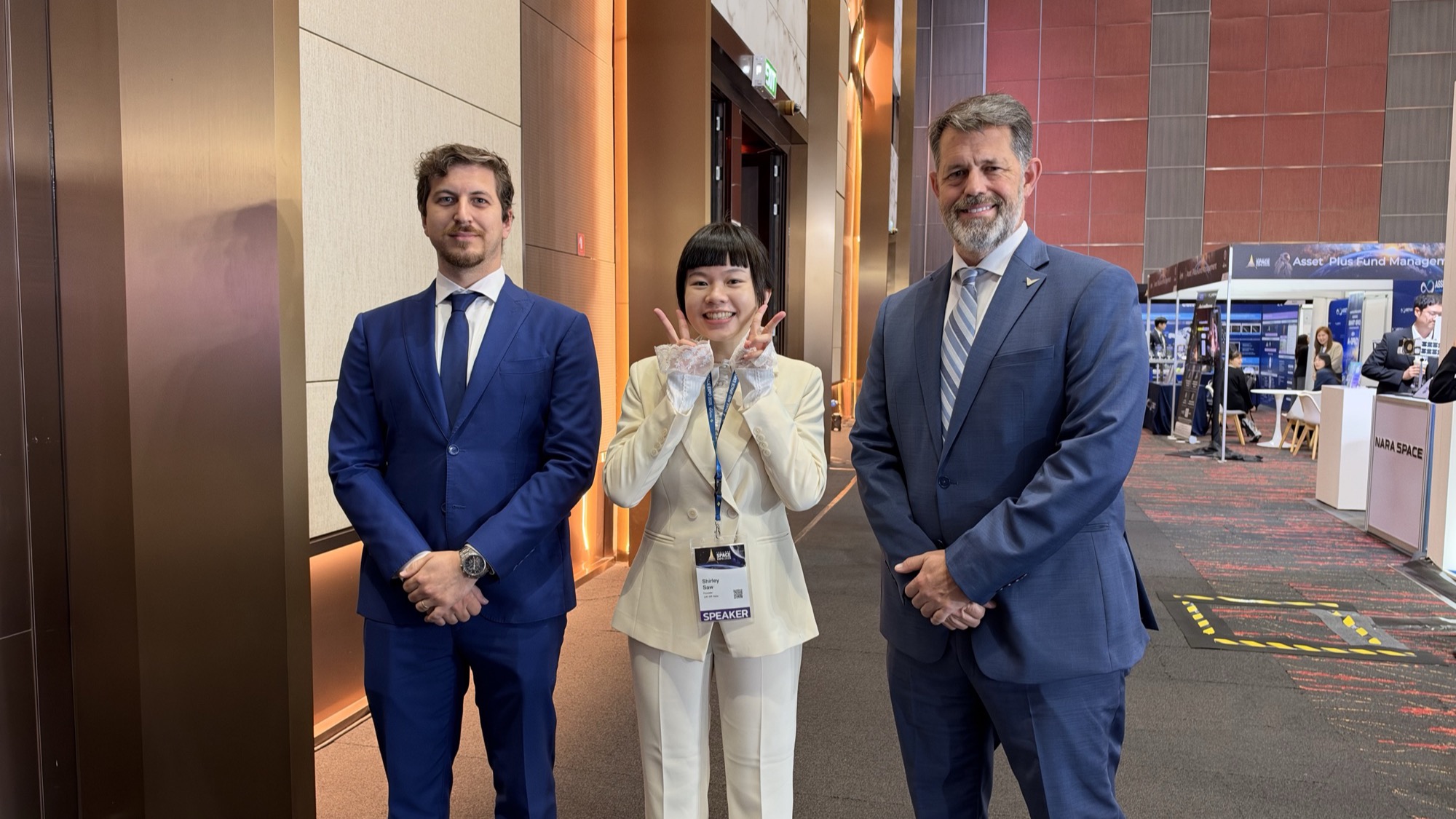
Shahrul said it better than I can. “South East Asia doesn’t lack space capabilities. We lack connection between them.”
— shirley
Free. One essay a week. Unsubscribe anytime.