Issue 23
How Japan built a space industry—one research fund, one startup, and one very large government customer at a time
Japan’s space industry did not appear because entrepreneurs suddenly decided to build rockets and satellites. Much of it grew out of a familiar loop: the government funds research, universities and companies develop the technology, startups form, and the government later becomes a customer.
TL;DR
- Japan put ¥55 billion into one high-risk research fund.
- One programme chased radar satellites at a tenth the cost.
- A startup formed around it, and later listed in Tokyo.
- It now holds a ¥105.6 billion Ministry of Defense subcontract.
One company shows the whole loop clearly: Synspective.

The research fund
In 2013, Japan’s Cabinet Office set aside ¥55 billion for ImPACT, a research programme designed to turn high-risk technology into real-world businesses. It ran from FY2014 to FY2018 across sixteen programmes.
Unlike many Japanese research programmes, ImPACT gave programme managers real power. They could choose which universities, companies and laboratories received money, and how much.
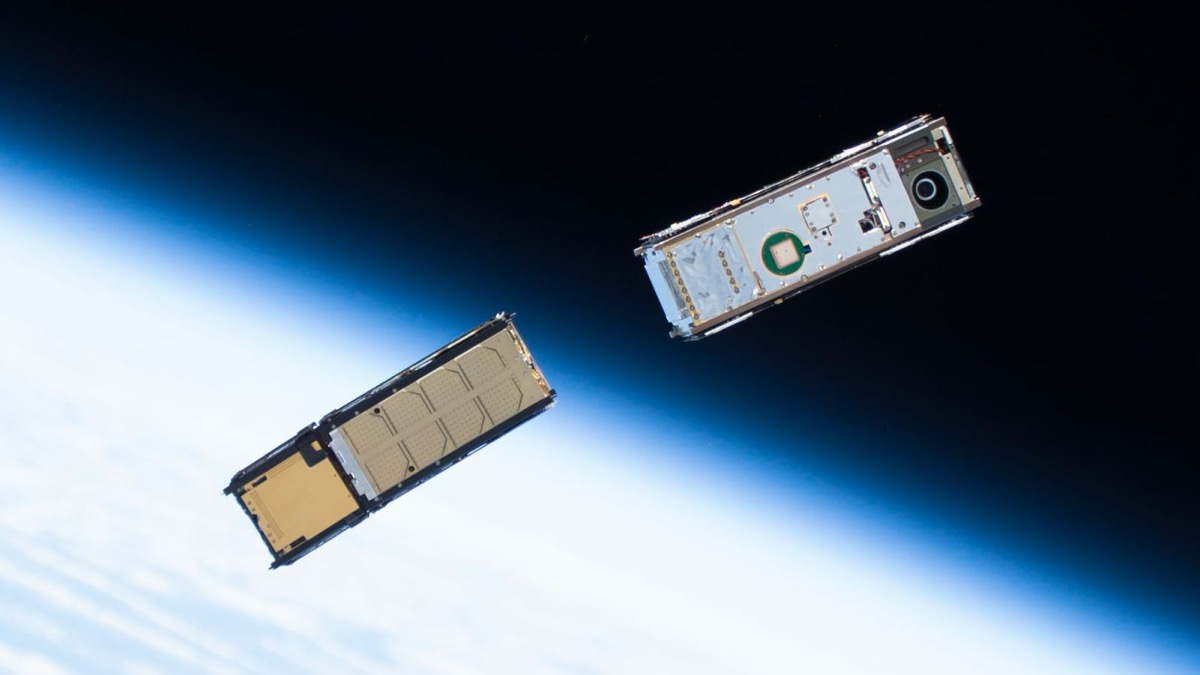
One manager was Seiko Shirasaka, a Keio University professor and former Mitsubishi Electric space-systems engineer. His project aimed to build a small synthetic-aperture-radar, or SAR, satellite that could see through cloud and darkness and be launched quickly when disasters struck.
The problem was cost. Conventional radar satellites could cost tens of billions of yen. Shirasaka’s team targeted about ¥2 billion per satellite in volume production—roughly one-tenth the cost—for a 100 kg-class satellite with metre-class resolution.
That was not a small improvement. It was a tenfold reset.
From university to startup
The research did not stay inside Keio.
Shirasaka set out to commercialise the ImPACT results, and went looking for someone to run the company. He was introduced to Motoyuki Arai, who founded Synspective in February 2018 and is still its chief executive. The company developed StriX, a small SAR satellite built on technology inherited from ImPACT.
Japan’s Cabinet Office says this directly in its March 2025 evaluation:
"Inheriting the technology developed in the ImPACT project, the small SAR satellite StriX was completed, and in February 2018 Synspective was founded."
Synspective then followed the usual path for a capital-intensive space startup: venture funding, early customers, satellite launches, and eventually an IPO. It listed on the Tokyo Stock Exchange Growth market on 19 December 2024.
It was not alone. ImPACT produced fifteen startups, which together raised about ¥90.3 billion—more than the original ¥55 billion research fund.
Then the government became the customer
On 24 December 2025, Japan’s Ministry of Defense selected a consortium for a satellite-constellation project. In February 2026, the contract was executed with Tri-Sat Constellation, a special purpose company created by Mitsubishi Electric, SKY Perfect JSAT and Mitsui & Co.
The project is worth ¥283.1 billion including tax and runs to March 2031.
Synspective’s share is ¥105.6 billion including tax: a subcontract with Tri-Sat and Mitsubishi Electric to supply small-SAR imagery and related services.
Put the numbers side by side.
ImPACT cost ¥55 billion across sixteen programmes. One company born from one of those programmes has since signed a single subcontract—inside a Ministry of Defense project—worth nearly twice the entire research fund.
iQPS, Axelspace and Mitsui Bussan Aerospace are also partners in the same project. Three listed Japanese space startups now sit inside one government-backed constellation.
The anchor tenant
Spacetide’s chief strategy officer calls this an anchor tenant: the large, committed customer that makes a business viable, the way a department store anchors a shopping mall.
For SpaceX, NASA was that customer. NASA contracts helped validate Falcon 9 and Dragon and gave the company revenue while it was still private.
For Synspective, the pattern came later—but on a much larger scale. It had government-related work before its IPO, then in 2026 won a subcontract worth nearly twice the research fund that helped create it.
Not every company follows the lab route
Not every Japanese space company came from ImPACT.
Astroscale, which removes space debris, works with JAXA, the UK Space Agency and ESA-linked programmes. Interstellar Technologies, a launch company, was named a JAXA priority launch provider in 2024. It has been awarded up to ¥15.4 billion through Japan’s SBIR programme. Space One was established in 2018 by Canon Electronics, IHI Aerospace, Shimizu and the Development Bank of Japan—a government-affiliated policy financial institution among its founding shareholders.
Some companies began in universities. Others began as ventures, consortiums or independent businesses. But across the ecosystem, the same force keeps appearing: public money, public infrastructure, or public demand.
The lesson
Japan’s space industry grew through a chain that is easy to miss when you only look at the startups.
The government funded high-risk research. Universities and companies turned that research into technology. Founders built companies around it. Investors financed the next stage. And when the technology matured, the government often became a customer.
Synspective is the clearest example. It began with ImPACT research at Keio, became a startup in 2018, listed in 2024, and now holds a ¥105.6 billion subcontract inside a Ministry of Defense constellation project.
That is how an ecosystem grows: not through one heroic founder, but through a pipeline that turns public research into private companies—and, eventually, into national capability.
— shirley
Free. One essay a week. Unsubscribe anytime.